What a maintenance visit includes
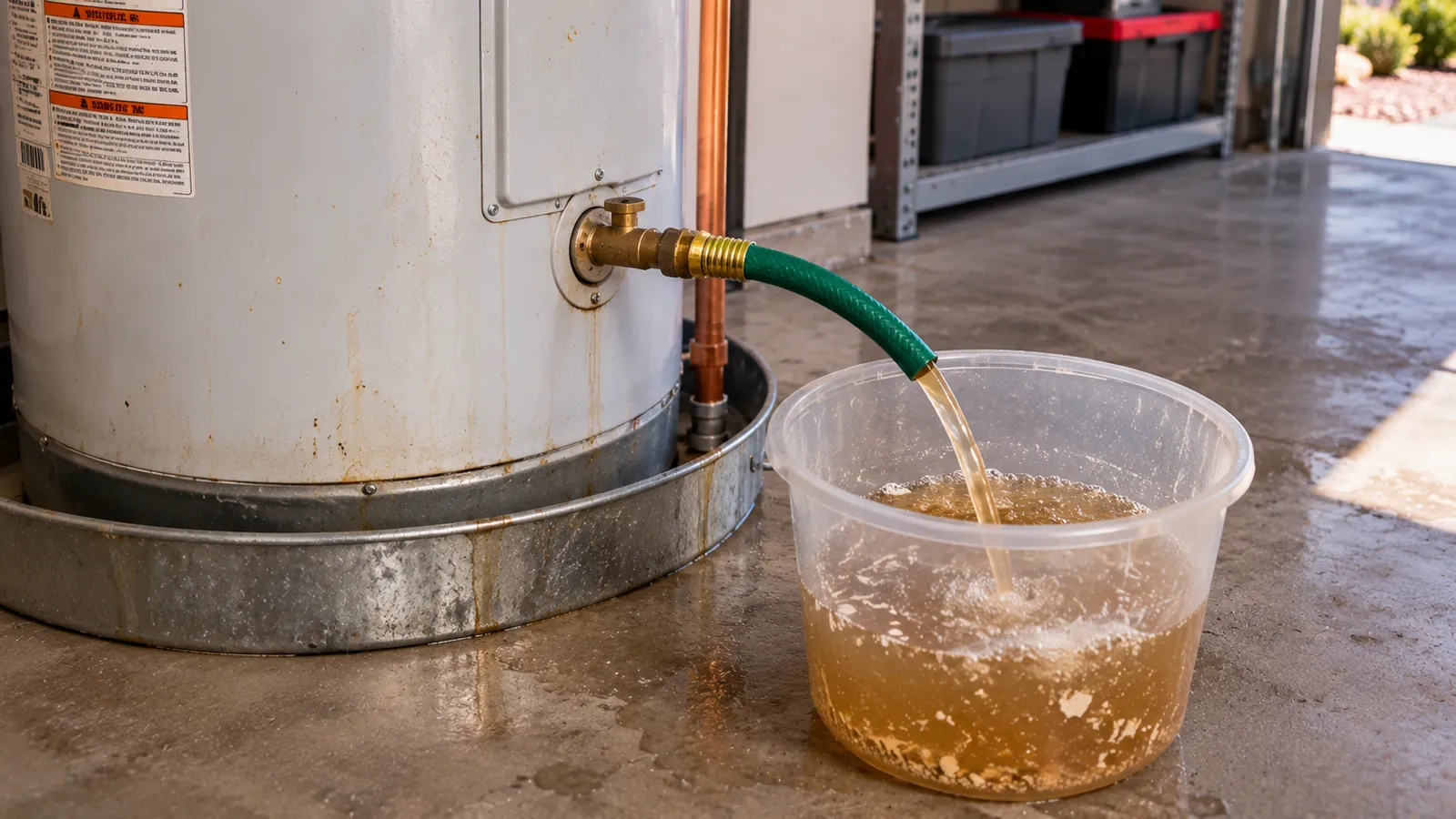
- Sediment flush to clear mineral buildup from the bottom of the tank
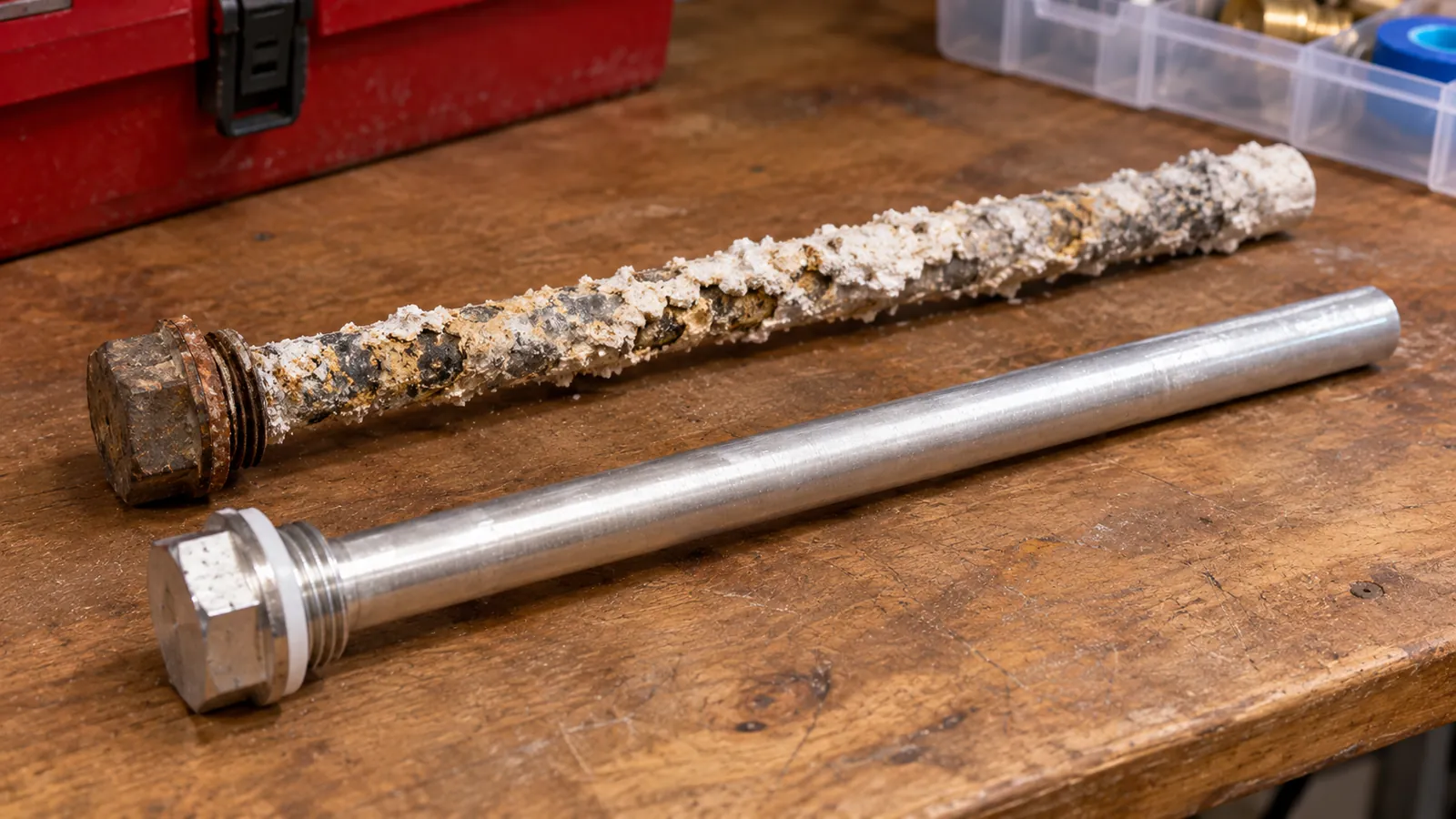
- Anode rod inspection, replaced when it's worn down
- Relief valve test
- Burner, pilot and venting check on gas units
- Element and thermostat check on electric units
- Leak check on fittings, valves and connections
- Temperature setting for safety and efficiency
Why the anode rod matters
The anode rod is a metal rod inside the tank that corrodes on purpose so the tank doesn't. Once it's used up, the tank itself starts to rust. Replacing a worn anode is one of the cheapest ways to make a tank last longer.
Tankless maintenance
For tankless units, maintenance means descaling and cleaning the inlet screen. See tankless repair and descaling.
Learn more in our hard water guide.
Questions we hear
How often should I flush my water heater?
Once a year is a common recommendation, and more often with very hard water. Check your manufacturer's guidance.
Can flushing an old tank cause a leak?
On very old, neglected tanks, disturbing heavy sediment can sometimes expose a weak spot. We'll talk about the risk first on older tanks.
What temperature should my water heater be set to?
Many manufacturers and safety groups recommend around 120°F to reduce scalding risk and save energy.