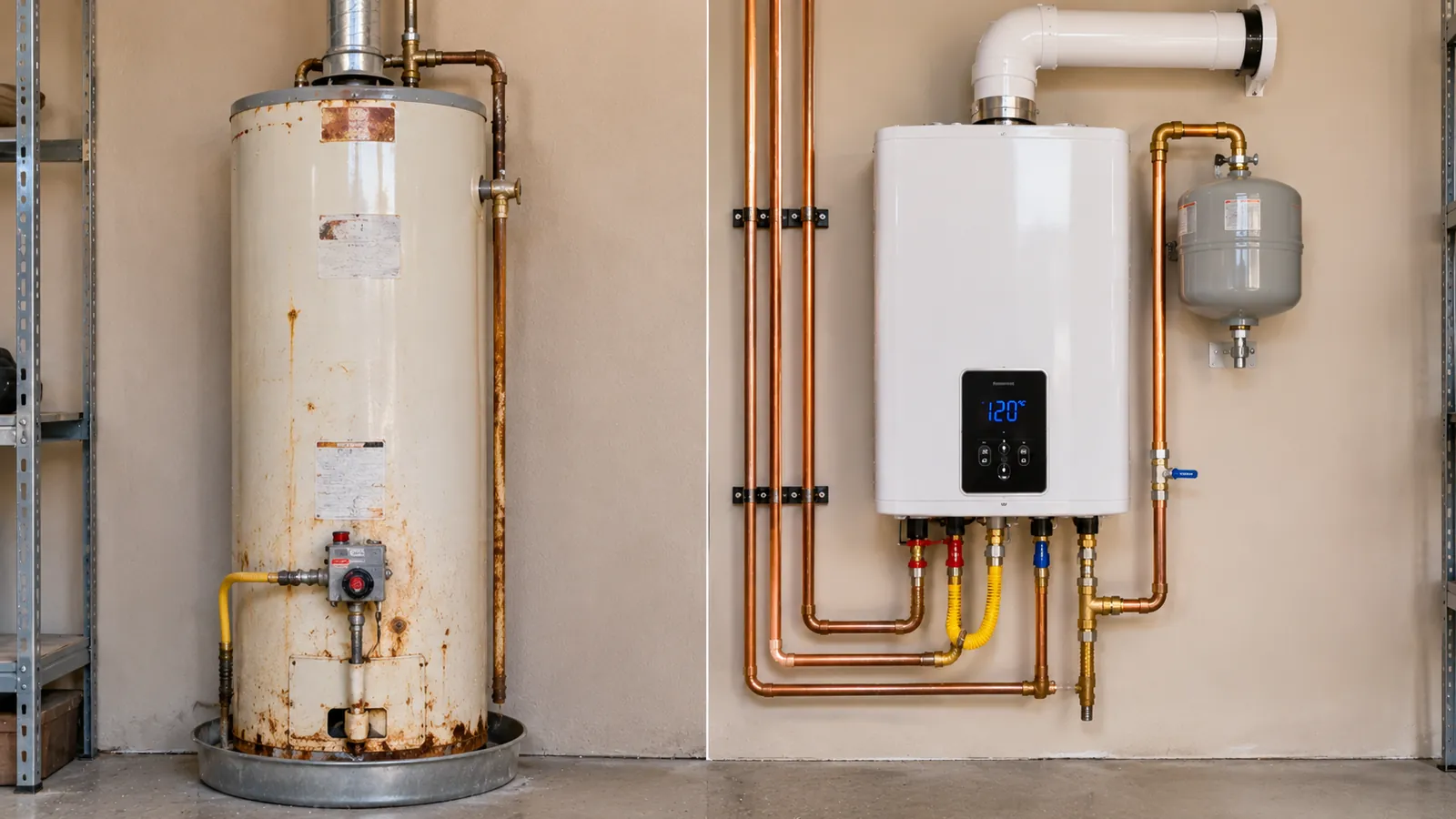
Signs it's time
- Water leaking from the tank body or bottom seam
- Rusty hot water from a tank that's ten years old or more
- Repeated repairs on an aging heater
- Not enough hot water for the household anymore
Picking the right replacement
The easiest replacement is the same fuel and size in the same spot. But replacement is also the time to ask whether that's still right for you. Bigger household? A larger tank or tankless may fit better. All-electric home? A heat pump water heater can cut operating costs and may qualify for rebates. We'll lay out the options.
| Option | Good fit when |
|---|---|
| Same-size gas tank | You're happy with your hot water and want the simplest swap |
| Larger gas tank | The household has grown or the tub never fills hot |
| Electric tank | No gas in the house |
| Heat pump water heater | Electric home, space with good airflow, interest in rebates |
| Tankless | You want endless hot water and wall space instead of floor space |
What's included
- Removing and hauling away the old heater
- New supply connections and shutoff valve as needed
- Relief valve and properly run discharge line
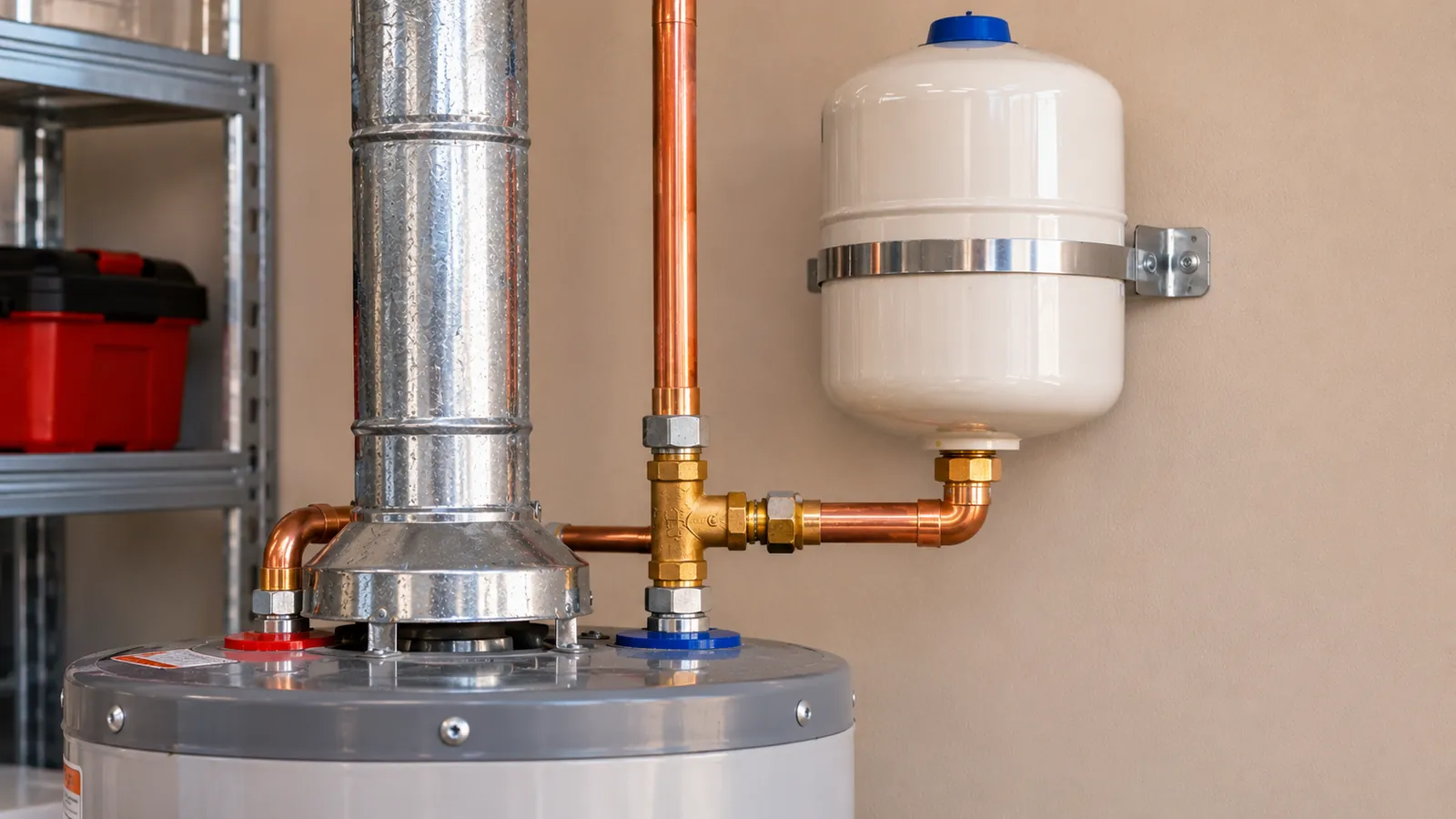
- Expansion tank where required
- Venting checked or corrected on gas units
- Drain pan where the location calls for one
- Leak and draft testing, temperature set, walkthrough
Gas units at altitude
Albuquerque sits above 5,000 feet. Gas water heaters need to be suited and set up for altitude, with correct venting and enough combustion air. We check both on every install.
Questions we hear
How long does a replacement take?
A straight swap is usually done in a few hours. Changing fuel type, location or going tankless takes longer.
Will you take my old water heater?
Yes, we haul it away.
Do I need an expansion tank?
Many homes with a closed plumbing system need one, and code may require it. We'll check yours.